
Narrative Voice in unexpected places
To a certain extent, I just want to use this post as an excuse to write about two of my favourite video games, which it so happens both come from the same developer, Kaizen Game Works.
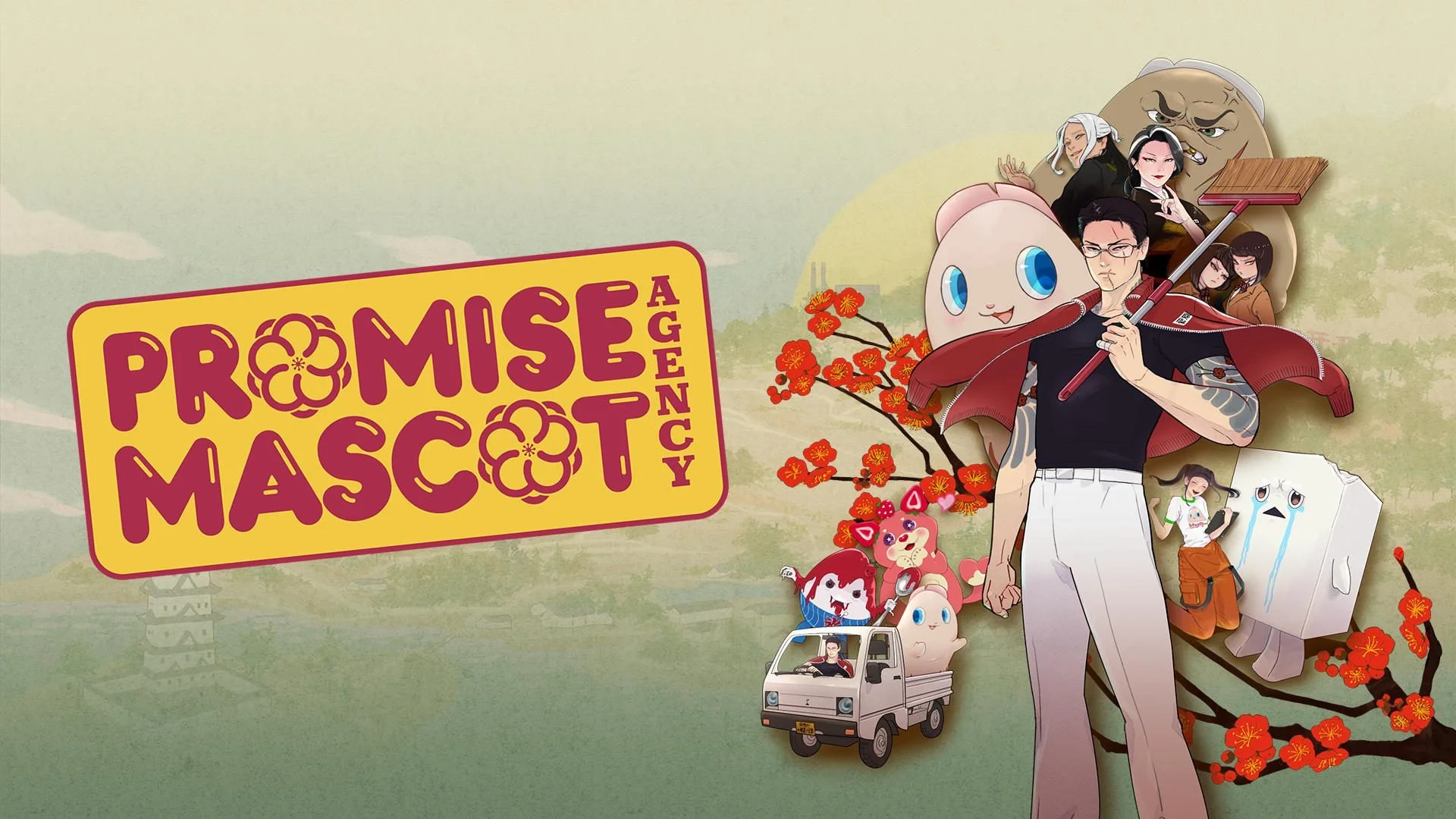
See, the thing is, I just completely knackered my sleep schedule this weekend because of their newest game, Promise Mascot Agency. Like, I’m not exaggerating, I did my day job from 8ish until 5:30 on Friday, and then I opened up my Switch to play the game I’d just bought, and… I didn’t stop playing until 3pm on Saturday, when I went for a four hour nap, woke back up and kept on playing until I finished it.
Authors, they’re just like everyone else, right?
I don’t do this kind of thing very often. Certainly not with video games - but I’m not wildly surprised, because I do it with books all the time. It’s just that I can read a book in 5 or 6 hours, so as long as I don’t start too late at night, I can still get some sleep. Promise Mascot Agency took me about 25 hours to complete, in total (I was taking my time because I was having so much fun).
Promise Mascot Agency is a deeply weird game, which I love on a bone-deep level. There should be FAR more weird in art these days, in my opinion.
It tells the story of Michizane Sugawara, or Michi, a yakuza lieutenant who gets into serious financial trouble because of his unswerving belief in the values of his criminal underworld found family. Said family could kill him for losing the money, but they don’t - instead they send him off in secret to a dying town in rural Japan to turn a dismal love hotel into a thriving mascot agency so he can secretly funnel the proceeds back to them.
And what are mascots in this world? Well, they’re weird little dudes. Living creatures, rather than humans in plush suits, and there is even a hint at some points that they might have a lot more in common with gods than anything else, but on the whole they’re just lil guys trying to make it in a world full of normal size doors and faulty pavements. Some of them struggle to find work, so mascot agencies send them out on jobs to promote businesses, and it’s your/Michi’s job to make that make a profit.
You’ve got some help too, in the form of Pinky, a mascot reminiscent of nothing so much as a severed finger, and the surprisingly helpful local townfolk, who can sign up to be Mascot Support Heroes to help your mascots out if they get in trouble.
Also, hey, if that’s not wild enough for you, there’s a central plot that sits completely adjacent to your attempts to make enough money to keep rival yakuza families away from your Matriarch. Because there’s a rumour that the town you’re in right now is cursed to destroy yakuza men who spend too much time there, and as we all know, curses are excellent cover for hiding secrets.
And now for something completely different.
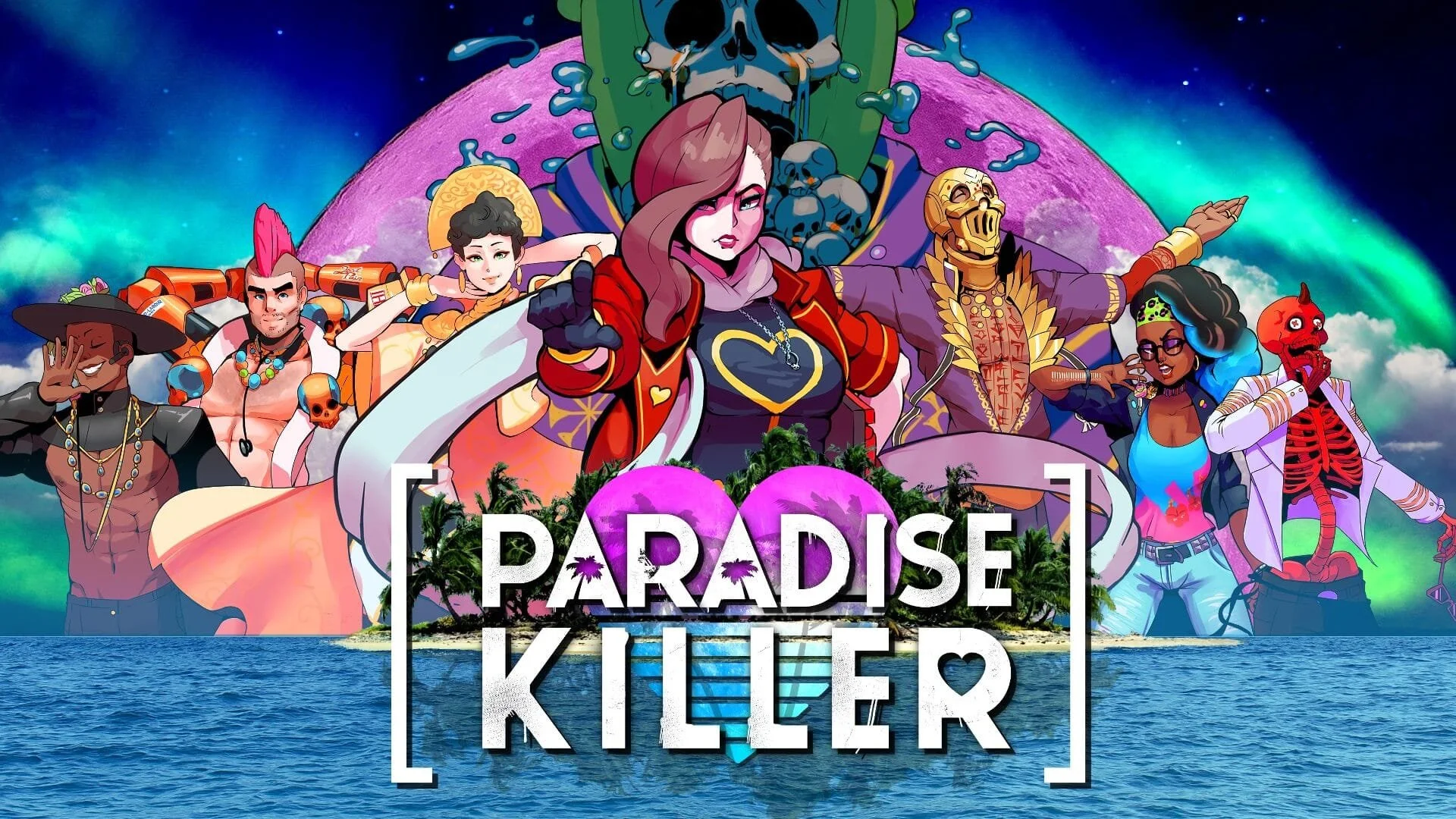
If you’ve ever been in a room with me for longer than 5 minutes, you might well have heard me RAVE about Paradise Killer.
It’s a cyberpunk/vaporwave vibe-fest, set in a sort of pocket reality universe where a powerful Syndicate of immortal elites worship strange gods called things like Damned Harmony and Crying Grudge.
You play as Lady Love Dies (and to be clear, as best I can make out, ‘Lady’ is her first name and ‘Love Dies’ is her surname), investigation freak and ex-head of the Psycho Unit which was disbanded when she was exiled to the Idle Lands more than 3 million days ago. But now there’s been a horrific crime on Island Sequence 24, right as it prepares to implode and make way for the island paradise known as Perfect 25. You/Love Dies must solve the crime to end all crimes before this happens, even though you’re relentlessly distracted by a charming pink and blue demon called Shinji who just wants to watch the world burn.
On the face of it, these games could not be more different.
Promise Mascot Agency takes place in a charming but definitely faded countryside-coastal town in the Kyushu region of modern-day Japan. It feels a little dated and old-fashioned in the same way underfunded rural towns in the UK do, and has a certain charm because of it. The Mascots definitely add some colour, but it isn’t a wildly outré setting, all things considered. Sometimes the brightest thing on the screen is a pile of pink rubbish bags. The characters are relatively diverse - there’s a Black British schoolteacher who came via a JAE scheme, and a latex-clad dominatrix running a bar, but they’re all human. Even the plot line leads to answers that are ultimately rooted in our world and how we might understand it, even if it’s slightly exaggerated the way a lot of yakuza media is.
Paradise Killer is full of blood sacrifices and demonic possessions - but not like any you would have seen before. There are gods you can speak to, but they’re practically indistinguishable from the demons you’re supposed to be battling against. There is no question that these gods and demons alike are all aliens; of course they are. And those blood sacrifices? It’s not even a spoiler if I tell you that the immortal Syndicate are only immortal because as soon as an island in their weird pocket universe starts to crumble they round up every single human they’ve kidnapped and enslaved to serve them there and bleed them dry before starting it up all over again. You, playing as Lady Love Dies, are part of this system - she’s not so much morally grey as morally bankrupt, except for her unfailing determination to get to the truth. But this is a world where facts and the truth might be two different things.
There are also a lot more hot, topless men in Paradise Killer, although I don’t know why I noticed that.
SO, these games are very different to each other. In Paradise, you’re on foot the whole time, which means you can scale huge, gilded concrete buildings to find answers. In Promise, you’re in a truck that can launch a finger-mascot at any target you fancy for maximum destruction. Paradise - you were in exile but they’ve brought you back. Promise - this is your exile, and you’re probably going to die here.
But. But, but, but.
It is unbelievably obvious these games are made by the same development team, and this is what really made me want to write about them, because it’s such a good example of authorial style and narrative voice that I think storytellers across a variety of media, not just video games, should be thinking about as they create.
Okay, so some of it is that you can, if you know where to look, find a Lady Love Dies card in Michi’s world. Dead Nebula, the mascot from the vending machines in Paradise Killer, also shows up on some cards as well. And sure, some of it is the fact that both these games are, at their hearts, visual novels, with linear storytelling that is enhanced by other collectibles you find as you traverse each map. The more effort you put into finding these collectibles, the more lore and story you’ll get - which means it’s entirely up to you how much effort you give to this over the main plotline (a lot, in my case, obviously).
But it is also more than that. It’s a gameplay loop that encourages you to explore, to return and re-return to the same places to find different information. It’s the clear adoration of classic games that came before, like Ace Attorney, Disco Elysium and Danganronpa for Paradise Killer, and the Yakuza series, Deadly Premonition and - dare I suggest - Pokémon for Promise Mascot Agency. (I have not spoken to the devs, obviously, but I pulled these suggestions from some interviews they’ve done as well as some YouTube shorts they made promoting the games).
It’s also the fact both games are so… strange, but in a thoroughly compelling way.
And obviously, as a writer - not of video games, but novels - this thought kept popping up as I played through Promise Mascot Agency. Even if I hadn’t known they were both Kaizen Game Works, I am confident I would have eventually said to my partner ‘huh, this kind of reminds me of Paradise Killer’.
But why does that matter? Well, as a player it matters because I know now what to expect from Kaizen Game Works. I trust them to tell me interesting and intricate stories in a way that makes me want to play all their future games. For them, obviously that’s also a good thing - I suspect I’m not the only fan who feels this way, and also if they can get enough of us to prove it with game sales and merch sales and playtime and reviews, they can use that to get funding from the few places where that’s still possible (Promise Mascot Agency was made in part with funding from the UK government).
In my world, that of publishing, it also matters - because I also want someone who has read ONE of my books to be able to pick up another one and think ‘ah yes, this is the style I love reading.’ The story might be totally different - I’m not writing about demons again, for example - but the voice, the DNA shared between the stories makes them family.
This is something I wish I could explain to absolutely everyone who wants to write but isn’t sure if their stories are good enough. Original enough. Look, there is barely an original story left on this earth, at this point. Everything is inspired by or influenced by something else, and that’s not a bad thing - in fact, noticing the influences in Promise Mascot Agency was half the fun! But the difference between, say, what a human creative can do when they take their own pocket universe of influences and turns it into a specific and deeply personal lens through which to tell a story, and what a generative AI tools does when it just regurgitates some text that feels like it probably comes next in some context or other is HUGE, and it comes from finding that authorial, narrative voice. Finding your style - and being brave enough to keep at it when you do.
Promise Mascot Agency is so odd. Is it a yakuza game or a collect ‘em all card simulator? Is it an open world exploration game or a business management sim? Oh, it’s all of the above and also a mascot who used to be a gravure model tries to seduce the bossman on a rotating, circular bed with red silk sheets? Oh, okay then. The silliness, the weirdness, the sheer audacity of creating something so wholesome in a setting so seedy feels so very human to me.
What I love about both of these games is the fact they’re stories on the edges. Island Sequence 24 in Paradise Killer is gorgeous, all neon pinks and glistering golds amongst brutalist concrete. But this island is about the fall into the sea, and from the moment you land back there after jumping from the Idle Lands, it’s obvious. You can tell. And as you explore the Opulent Ziggurat with pools of Citizen blood drenching every surface, it’s still beautiful, even though it’s unsettling, and it forces you to ask yourself - is any of this really justice?
Kaso-Machi in Promise Mascot Agency is a lovely little coastal town - the kind I’m sure I’d have a great visit, because I love the seaside so much. But the corruption and desperation of the town’s version of the elite (not nearly as overreachingly evil as the Syndicate, but like, if you lived there that wouldn’t matter to you; the fact your mayor’s doing nothing to stop the town sliding into economic collapse would) is clear and ugly all the same.
Maybe I love them so much because I feel like that might be my niche, too - stories and characters everyone else disregards, having incredibly strange, outlandish adventures. That’s part of who I am, it’s part of my narrative voice. So I cannot help but be thrilled to find such a clear example of it in these two games, as well.